Showing posts with label Natural. Show all posts

Sunday, August 8, 2010

Just another lazy Sunday afternoon.

Children in Khorixas, NamibiaImage via Wikipedia
It is a warm Sunday afternoon for this time of year. The sun has been shining all day and the wind has been progressively abating. Children can be heard playing in a back yard nearby, and the birds are preparing for the onset of evening. I sit at the computer which hums gently as I type. This scene is composed of spatial elements and social conventions much more than it is by my psychology apart from a desire to understand and communicate this understanding.

There is a world of relationships that exist beyond my body. It enters my body only as an after-image of that reality and in the form of language patterns given to me by others. It is true that as a poet I have invented the odd word and often in syncronicity shared that with others who too have invented the same or similar words and phrases in isolation. but this is, and always will remain, the exception rather than the rule. We are born into a world of concepts and relationships and are introduced to these through language and social conventions.

Sunday is not just any day. I live in a society predominately descended from the Western Judeao-christian tradition. As such, Sunday is the first day of the week through convention and traditionally a day of peace. I like this idea and so try to project that onto my world and read it in a way in accordance with the concept that I have inherited along with others. It is quieter because the week ended yesterday and the children can play and the adults relax in preparation of another week of work and learning.

The spatial relationship is also important. While the computer sits foregrounded as I seek to write another blog prompted by a Facebook friend, the children are some distance off and perceptible only through earshot. If they happened to be in my tiny flat it would not be as serene and peaceful. Indeed, if they were playing at the same distance but in the middle of a busy intersection during tomorrow morning's peak hour, I would probably be quite distressed with a feeling of responsibility for their combined safety.

The birds, too, would be problematic if they were in the room with me. Full of fear and anxiety as they tried vainly to escape the confines of my bungalow, they would know doubt fly into walls, me and my computer, making it almost impossible for me to write anything.

I can imagine all this only through prior experience, either personal or conveyed to me in linguistic blocks and phrases, which describe certain behaviours and preclude others. These social relationships that are present in language are appear always already there, to have an a priori existence and come to me in the forms of bodily feelings and postures.

At the moment I am relaxed and peaceful because of what I have described above as the scenario that exists in my immediate surroundings. If it were as I have imaginatively described my body would start to feel anxious and affect the very words and behaviours that are necessary to communicate with others.

This is not trivial. Objects in our perceptual field exist in relation to me and to each other. That relationship is inseparable except in text books that seek to isolate and focus on one object to the exclusion of others momentarily so as to seek an understanding of that object's essential characteristics. In reality, however, an object can never be fully understood in such isolation in its complexity.

Concepts and ideas, like objects, are also in such a relationship with each and the particular social milieu that they inhabit, that is, they exist defined by space and time and as such are essentially historical in nature. A table is built from already existing materials according to the fashions of the time. At times fashion itself is backward looking and so it may be a reproduction design from an earlier era. At others its design will be inspired by an imaginary future.

In either case, what is being built is a functional contemporary object whether its creators see it this way or not. As well as this, the table is built from pre-existing materials and transformed into an object which its makers recognise as an object with the functional attributes of a table. Furthermore, at some future time it will cease being a table and the materials consumed in its transformation will either be utilised for some other human purpose or return again to a static state able to be re-transformed into some other object of utility either by human, animal or some other naturally occurring force.

Ideas, concepts and memories, that is, those human constructions that exist on the Invisible rather than  Visible plane, are no different. Sure, they can be externalised in the form of the written word and transmitted via books, texts or indeed performances, yet they are still constructed in much the same way from the linguistic fragments of 'natural world' and given life through the spoken or written word, music and paintings, mathematical concepts and the body of knowledge described, recorded and experimented with in some sort of 'scientific' endeavour.
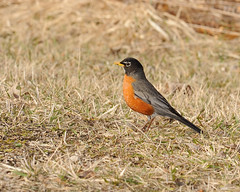
2009-04-04 Bong Recreation Area 1
The Invisible realm is just as real as that which we can directly perceive. Indeed, as I began, this realm always seems to be already present before we even try to speak, just sitting around encapsulating the solidity of the reality we move amidst. 

'It is Sunday' seems like such a simple statement, yet is pregnant with social and historical connotations, in constant flux as an object precisely because it exists amidst the flux of ideas that we as humans continually project and receive through our various perceptual apparati. It is our failing as Image by JanetandPhil via Flickranimals that we need to isolate to understand, and so to come to a richer understanding we need to constantly remember this limitation of the way we are in the world.
Enhanced by Zemanta

Thursday, July 29, 2010

Looking for similarities amongst the differences.

WASHINGTON - JANUARY 28:  U.S. Health and Huma...Image by Getty Images via @daylife
It is an adult thing to live in a world of difference. Since childhood we have grown accustomed to differentiating objects in the world and naming them. Of course, this is a purely human occupation and part of our learning about the world we live in. In the end, though, we risk losing the ability to see things clearly for what they are, as this process of differentiation separates each object in our field of perception into individual elements.

A child perceives the world as a whole field of moving and stationary objects. There is little differentiation at first. The first foregrounding of an object is possibly its mother's smiling face followed by the teat presented as a source of oral satisfaction and food. Still, at this preverbal stage the objects are yet to be named and exist in the foreground against a background constructed to varying degrees in a way deemed suitable for the raising of a child.
   
Almost immediately the child is introduced to its mother tongue, and to  the process of the linguistic linking of objects in its sensory field with names learned both in isolation and connection with one another. This learning continues well into adulthood for many, as every more complex objects become integrated into the matrix of language which go to make up each persons vocabulary.
The integration of these words into this matrix becomes knotted with the increasing differentiation between the individual words. Also, this knotting is accentuated in when one considers the individualism prevalent in complex late-capitalist societies, where each persons vocabulary is pitted against the next persons in a battle for linguistic superiority and acceptance. This process is a dialectical one between fractured individuals living in disparate communities each jockeying for placement and meaning within a their community and each community positioning itself for access to scarce resources.

Rather than seeing this as an historically contrived evolution, post-modernists argued instead that this was in someway the natural state of affairs. That language was a process that constructed meaning through the differànce amongst words, assuming from Saussure onwards, that words are learned against each other, that an object is defined as this and not that. Words are learned as discreet units relating to discreet objects and only later against other objects. They are just as commonly related to similar objects. Post (post) modernism or the return to the future of the modernist impulse recognises this.
 
I passed onto my children language in the form making connections between words and pictures of objects as well as through reading picture books to them. Words and narrative were related to them and to a visual representation of what they signified. In going out amongst the real world, the children would spontaneously practice asking, Car? while pointing at a variety of automobiles, or Cat? while pointing at a small dog on a leash. No that's a doggie, I would say in reply, or yes! that's a car. Anyone who has parented a child knows the routine which is both rewarding and at times tiring.
 
 A similar effect can be observed through the learning of narrative. Imagine a child running out dressed as a fairy complete with a magic wand and a tiara. Here, a cluster of words go together to make a fairy. The fairy is not made against goblins or superheroes. In fact the child is likely to quiz an adult 'What do I look like, Daddy?' confirming for the child that he or she has got the cluster of meaning right. If a Superman appeared discretion would be called for if the child insisted on being a fairy. I've never seen such an occurrence but I suppose it is possible. 
 
Once the language matrix is formed, however, in all its complexity and in social competition with siblings and peer groups, a process of differentiation appears to take place with the way these words are stored. Similar objects become isolated from each other and differànce becomes an operational function of the way words are used. This is a margarine container and that is a plastic storage container. The tree outside is alive while the wooden desk is dead. The matrix has integrated differentiation within its structure and blinds the body to the similarities between the containers both being plastic and the tree and the desk as both being made out of wood.
 
When I awoke this morning I started to think of similarities between the objects in my sensory field. The sun is warm like me. It is a body that throws off heat just like my body does.  It is rises every morning and sets at night, it begins and ends just like a story, and just as my body is bound to do. When it sets it goes somewhere else just as I will when I am gone. 
 
The tree outside of my window has branches and I also have limbs. Through its limbs flow a fluid just like a fluid flows through my limbs. I recognise it through its similarity to my body. It is alive. So too is the sun which is full of fire as I am full of heat. It is irrelevant to me what the source of that heat is and how hot it is. To me the suns rays caress my skin as if they were emanating from another body close to mine. I don't care how far away it is. That is not for me. I am not a scientist.
Once out of bed I logged into my Facebook account. Somebody was full of this post-modernist difference asking me to see that men and women are different, begging me really. Well, I would have thought that was self-evident I wrote in reply. Gender hatred is based on this differentiation. So too is racism and any other form of hatred, this desire to see difference amidst overwhelming similarity. Hatred in based on this impulse to neglect the similarities in favour of differences. 
 
The knotting of words becomes a knotting of the body, a posture full of anger towards the objects of the world, with muscular energy displaced towards objects outside of itself, either towards externalities or the inner self, resulting in self-hatred and loathing. There are differences between men and women as was written, but the similarities are overwhelming, the variations slight.  We are human. Of course the differences have to recognized and tolerated because of the similarities and not in spite of them.
 
The birds were singing this morning. So, too, was I. I felt we were both singing for similar reasons. It was a beautiful sunny winter's morning. The birds were expressing there joy at a new day bodily in the same way that my body was expressing joy. They seemed less inhibited about their singing than I did perhaps, but nonetheless, we were both honouring the warmth of the sun. We were behaving similarly. I am able to think of this because they too share a body like mine, a body that moves in the world and seeks shelter in a storm and some food in the morning. There is of course one big difference of course. I only wish I could fly.
Related articles by Zemanta
Enhanced by Zemanta